To what extent do recent discussions about a massive deployment of offshore wind turbines in the North Sea illustrate the potential of game theory to mitigate the costs of missed opportunities?
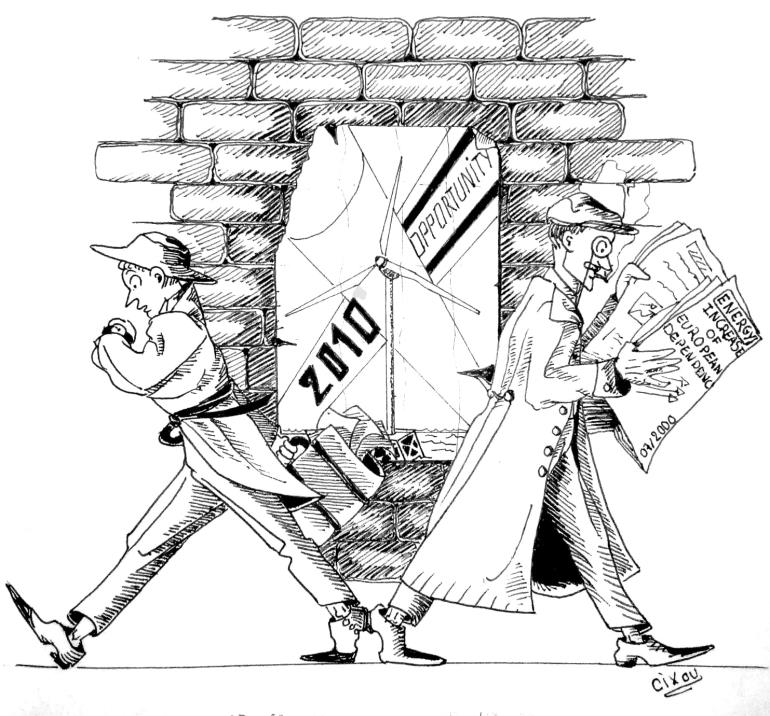
The Declaration of Ostend expresses the interest of nine countries of the North Sea region in collaborating on the installation of 300GW of wind turbine capacity by 2050. It comes fourteen years after a similar statement of purpose, the North Seas Countries’ Offshore Grid Initiative (NSCOGI), signed in 2009 by the same countries, except Sweden.
In 2016, the costs of offshore wind turbines, excluding connection costs, had already decreased sharply, reaching 35€/MWh for some projects in this area. This progressively turned the sector into a profitable one without subsidies. It is therefore interesting to understand why the Ostend Declaration has been signed today, and why the NSCOGI has failed to some extent.
In 2017, I studied the reasons for the failure of the NSCOGI, in a document available here. These reasons were mostly related to discrepancies between the geopolitical and industrial positioning of each country involved. They were linked to the economic impact of maintaining control over their electricity production. As a result, there was limited motivation among these countries to cooperate in designing this grid.
In the same document, I also listed the massive costs resulting from the failure of the NSCOGI and the fact that Europe was not benefiting from the following opportunities:
- Improving the European Union’s energy security and economic competitiveness
- Tackling energy poverty among the population
- Reducing CO2 emissions from European power generation
- Enabling manufacturers to optimize the design of wind farm networks and reduce the impact of the intermittency of those turbines on the European grid
Since then, Europe’s energy dependency has become an obvious incentive for these countries to collaborate. The economic losses due to increasing energy scarcity, and thus due to rising energy prices, are higher than before, leading them to revise their strategic position regarding this grid.
So now, what does game theory have to do with wind turbines? Game theory expresses the idea that the optimal situation for all players frequently cannot be reached naturally due to individual behaviours. It therefore helps analyse the cost of missed opportunities and adapt strategic decisions accordingly.
Such modelling could have anticipated this strategic shift. It would have shown that the equilibrium of the game was likely to move in favour of more collaboration in order to maximize economic benefits for all. It could have provided strong arguments and insights to avoid losing years of project development.
Today this failure contributes to the impoverishment of the European population and to the shrinking of its industry. Europe might need years to recover from these losses. Public policies do require anticipation.
Economic modelling is a valuable tool for mitigating the costs of many missed opportunities, especially when anticipation becomes crucial in a context of increasing resource scarcity. Don’t hesitate to contact me if you require economic modelling skills for your strategic decisions, I will be glad to provide tailor-made modelling support.